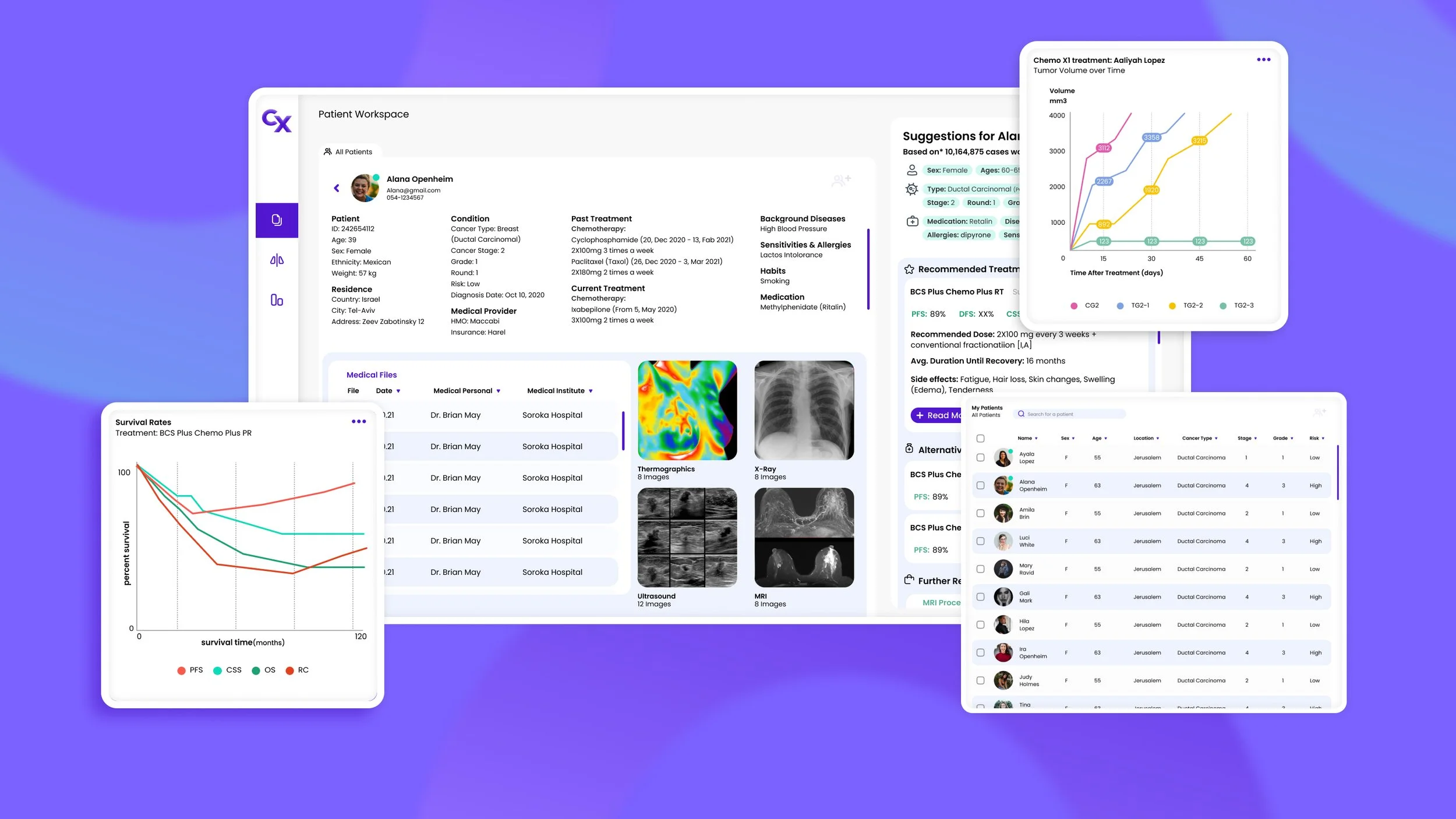
Onco - an all in one big data saas solution for oncologists
My Role: UX Research, User testing, UX Design, UI Design, Prototyping.
Project duration: 4 Months.
Tools: Figma
Overview
As a part of my advanced UX/UI Design course, we were asked to plan and design a SaaS product that will be used by organizations or professionals with social missions or NGOs.
Background
Cancer is a leading cause of death worldwide, accounting for nearly 10 million deaths in 2020. A correct cancer diagnosis is essential for appropriate and effective treatment. It is a race against time, and when oncologists supervise and manage each patient's health throughout the disease, they must work efficiently and carefuly in order to provide the most effective treatment as quickly as possible.
Relevant data and information is available everywhere, but it is scattered throughout many websites, agendas, articles and softwares. In addition, we saw how a global collaborative effort in trying to manage and solve the Covid-19 pandemic using Big-Data has led to an effective and rapid medical solutions.
The Problem
Today, there is no accurate and centralized big numbered data about cancer and its treatments, essential data that should help oncologists pinpoint the best correlated treatment for all of their different patients.
First things first let’s understand the user
Understanding The User
User’s main pain point
1- Based on interview with Dr. Baron: Doctors want to give their patients the best treatment out there but they don't have the tools to compare and analyze treatment easily and effectively for each patient.
2- Based on interview with Dr. Omri: Doctors today use multiple softwares, website and books simultaneously while working and it can get frustrating when trying to work efficiently.
3- Based on interview with Dr. Galit: An abundance of patients that are under constant treatment for many years create an overflow of data that is hard to organize.
The Solution
A medical software that is based on driven data from other medical softwares doctors already use, and by collecting this worldwide data, the system assists oncologists by giving each specific case its most effective correlated treatment options while also helping him manage their patients files, analyzing them and comparing them.
Our Goals and KPI’s
We want cancer patients to recieve the most accurate and tested treatment that is relevant to their specific case and condition.
The main KPI’s:
-Does the system provide the most accurate treatment solution to a patient?
-Does the system help organize patient data efficiently?
-Does the system shorten the user’s search and research processes?
-How long does it take the user to compare medical data?
-Drop rate
UX Research
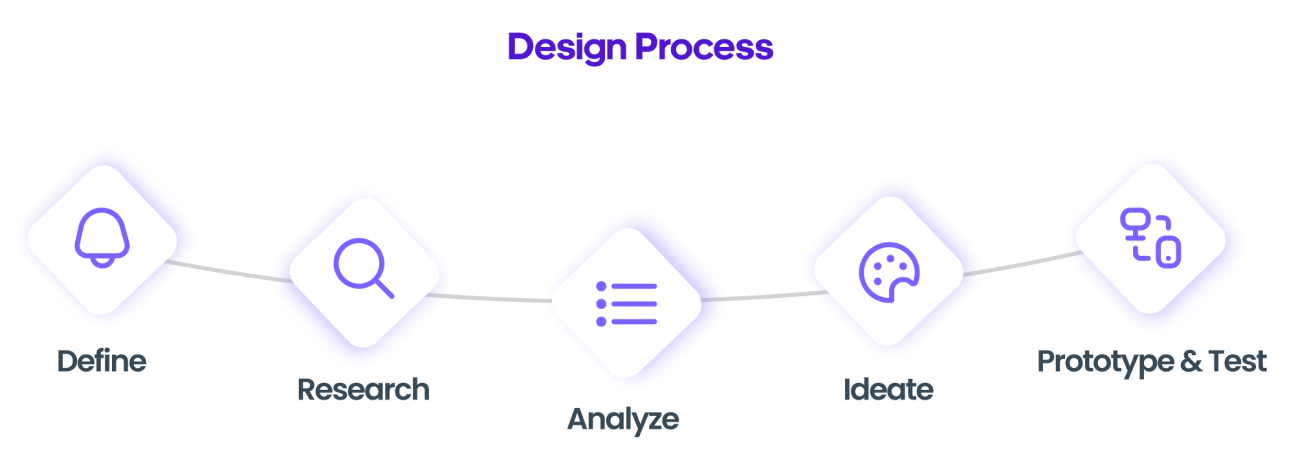
To get to know our users better, we needed to conduct a UX research to identify and understand our users needs in order to design without biases. During the UX research process, we interviewed potential users and based user personas accordingly. We’ve also created user stories and a journey map.
User Interviews
To better understand a doctors workflow and their needs, we interviewed three doctors from three different residencies.
Takeaways from the Interviews
-We understood their core main needs.
-They need a centralized platform that shortens their treatment searching process so they won’t have to use multiple different softwares and agendas.
-They would like to have a option to compare data easily (globaly and localy).
-They want a software that collects huge numbered data and assists them throughout the treatment journey for each specific patient and his case.
-They need a better place to organize their patients and manage their progress easily.
User Persona:
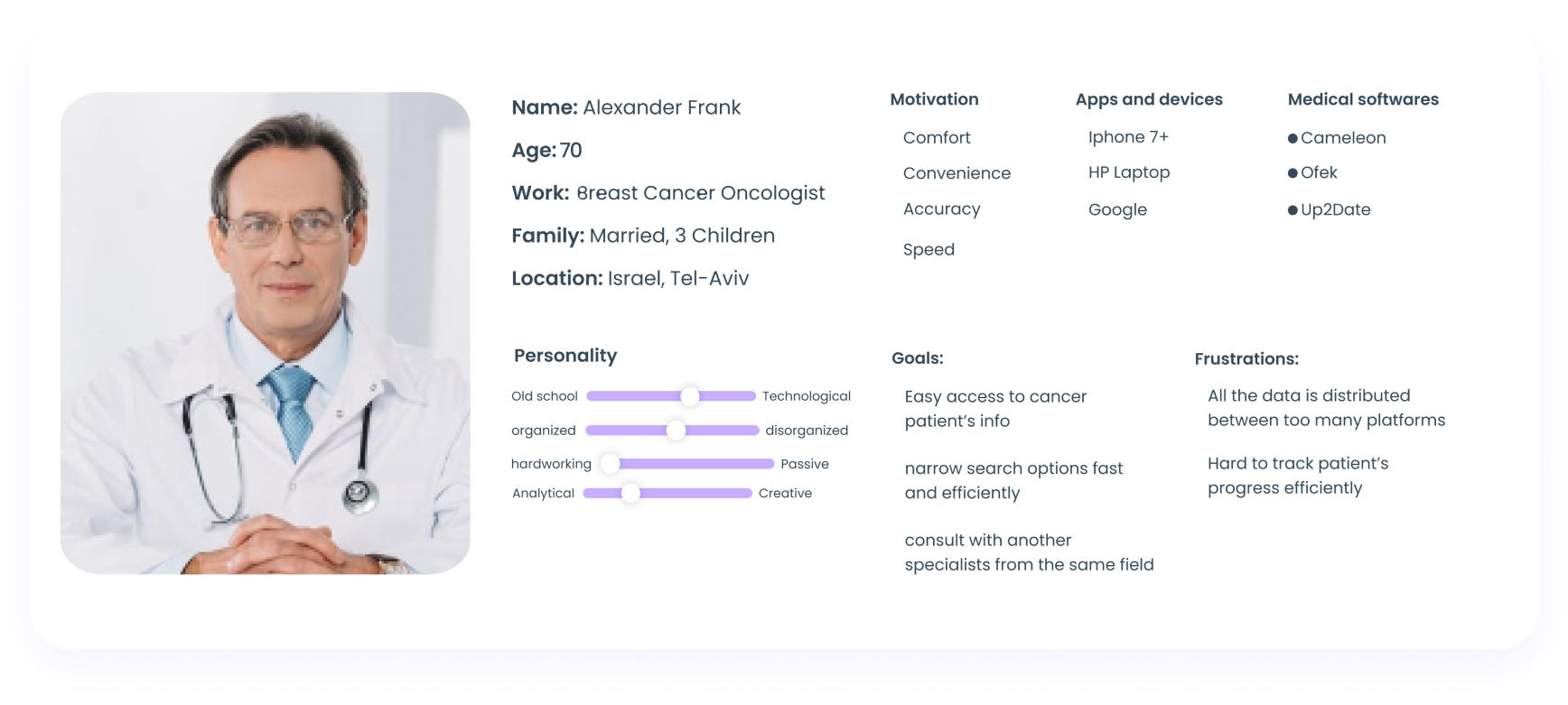
User Story: As a breast cancer oncologist based in Tel-Aviv, I want a platform that helps me save time on researching treatments for my patients, so I can give them the right treatment according to their condition and increase their survival chance.
Problem Statement: Alexander is a breast cancer oncologist based in Tel-Aviv, who needs a platform that helps him save time on researching and finding the best treatment for him patients, to assist the patient better by giving him accurate and the best efficient treatment there is
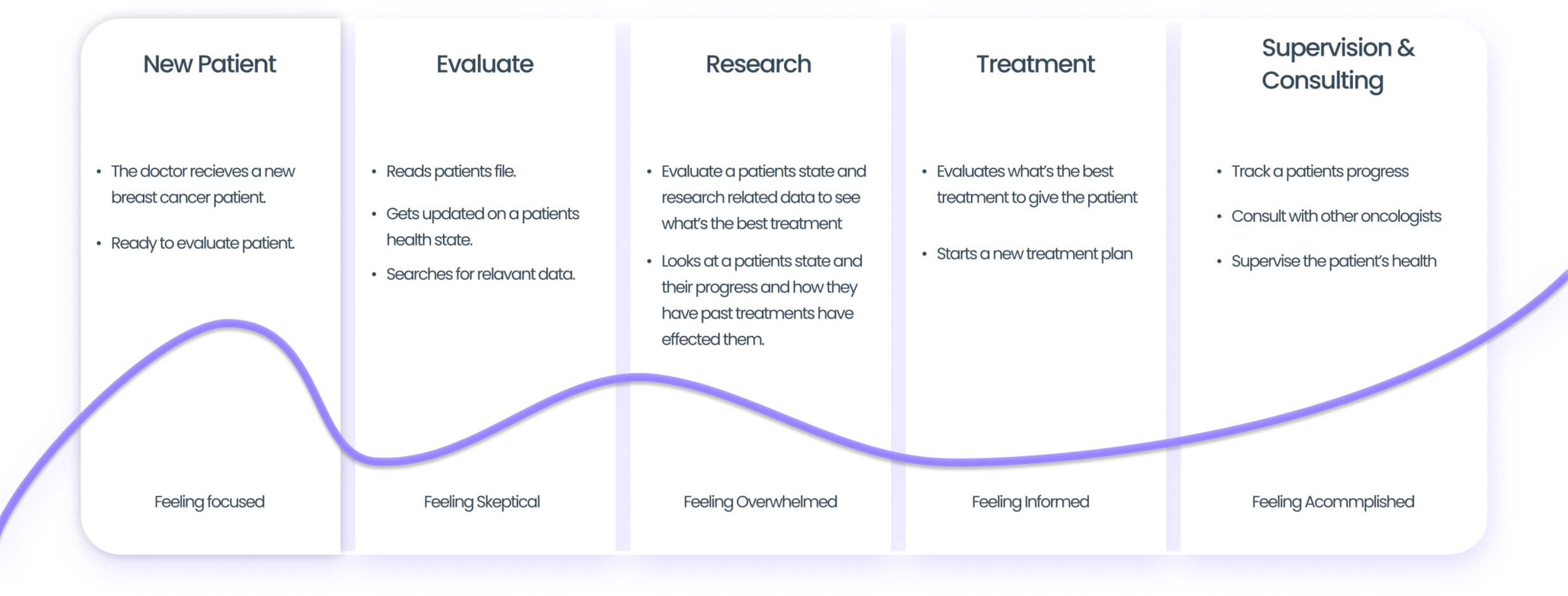
Journey Map
Oncologist’s Current state journey map
Ideation Process
After conducting research and interviews with our users, we had a better understanding of their needs so now we can start ideating based on the research.
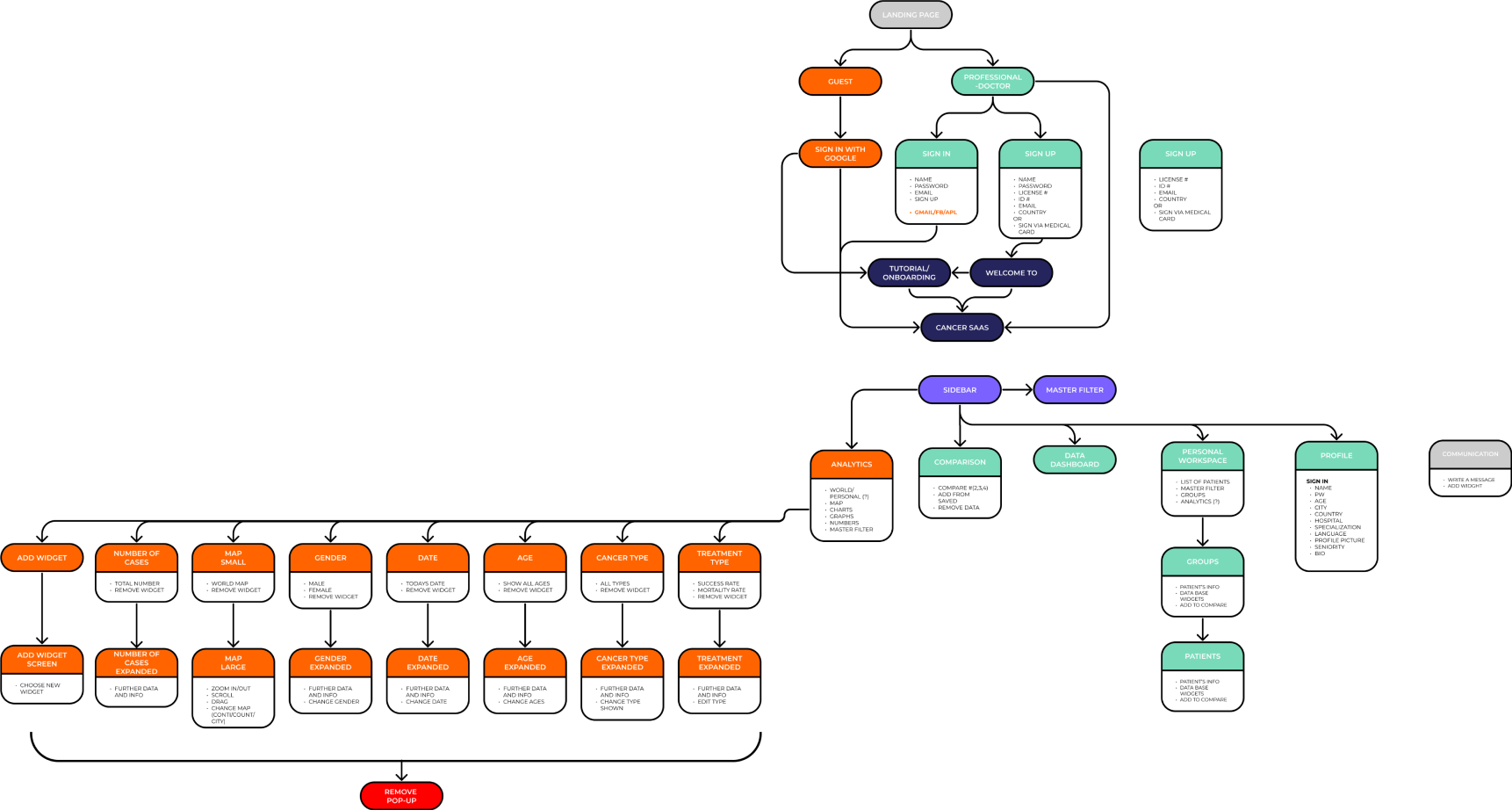
Flows
After long sessions on our whiteboard and doing a lot of fast sketches we were able to narrow down and focus on the main flows our users need in order for it to function as a minimal viable product.
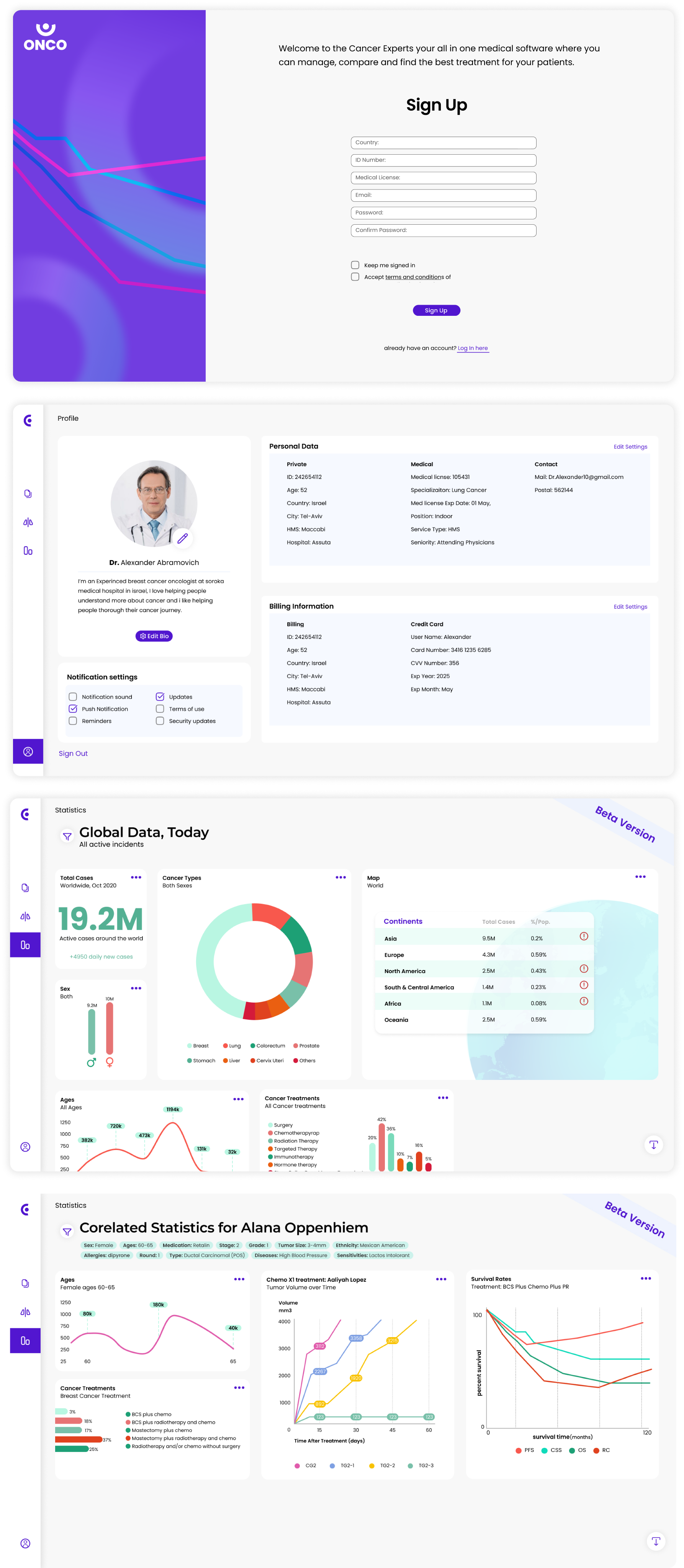
Flow 1 - Sign Up/ Log In
Flow 2 - Main Flow: Patient Workspace, a doctor recieves a new treatment suggestion for his patient
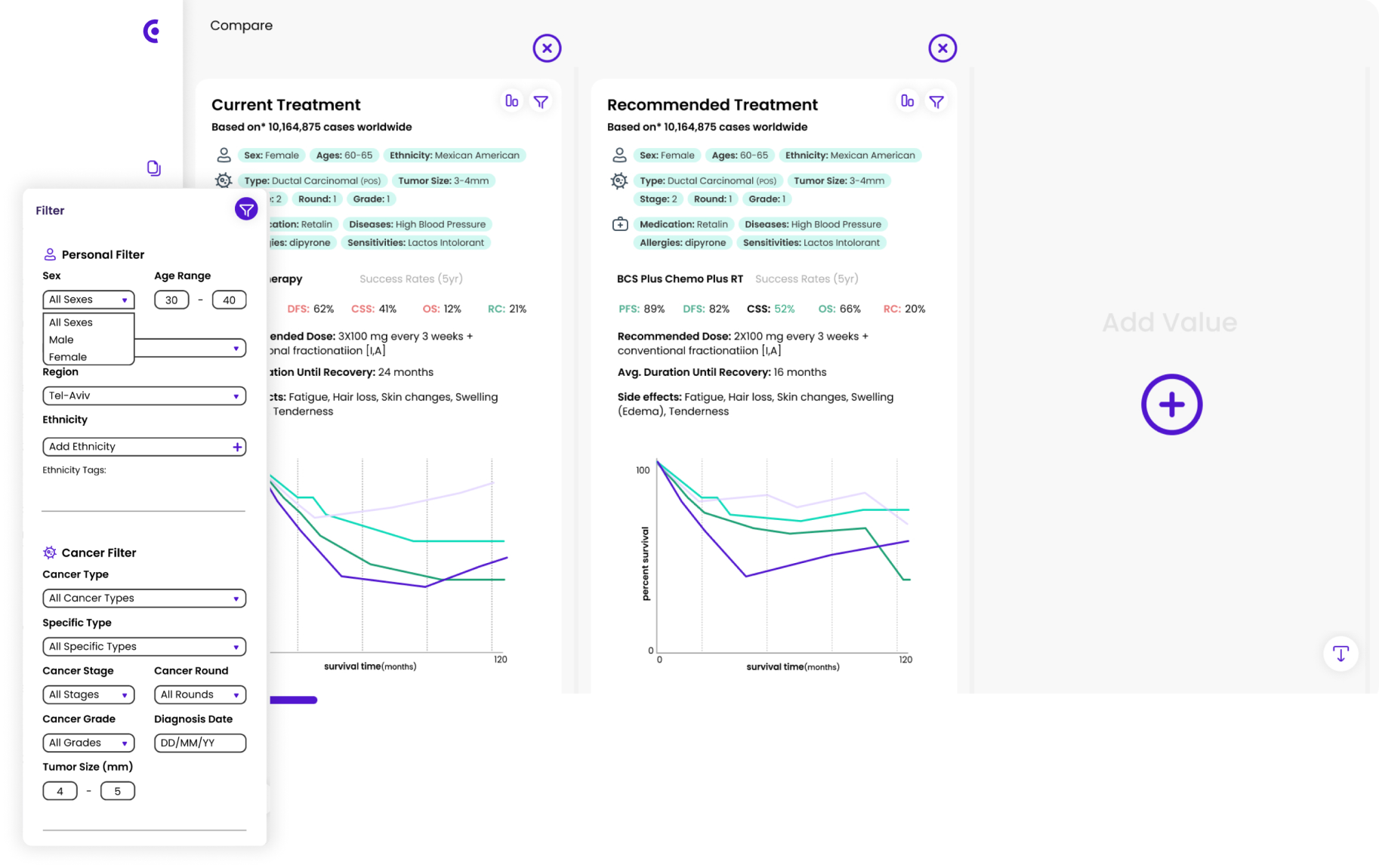
Flow 3- Compare: compare mode allows the doctor to compare data easily and efficiently
Flow 4- Statistics: global statistics for worldwide data about all cancer related topics ( Beta*)
The Main Flow:
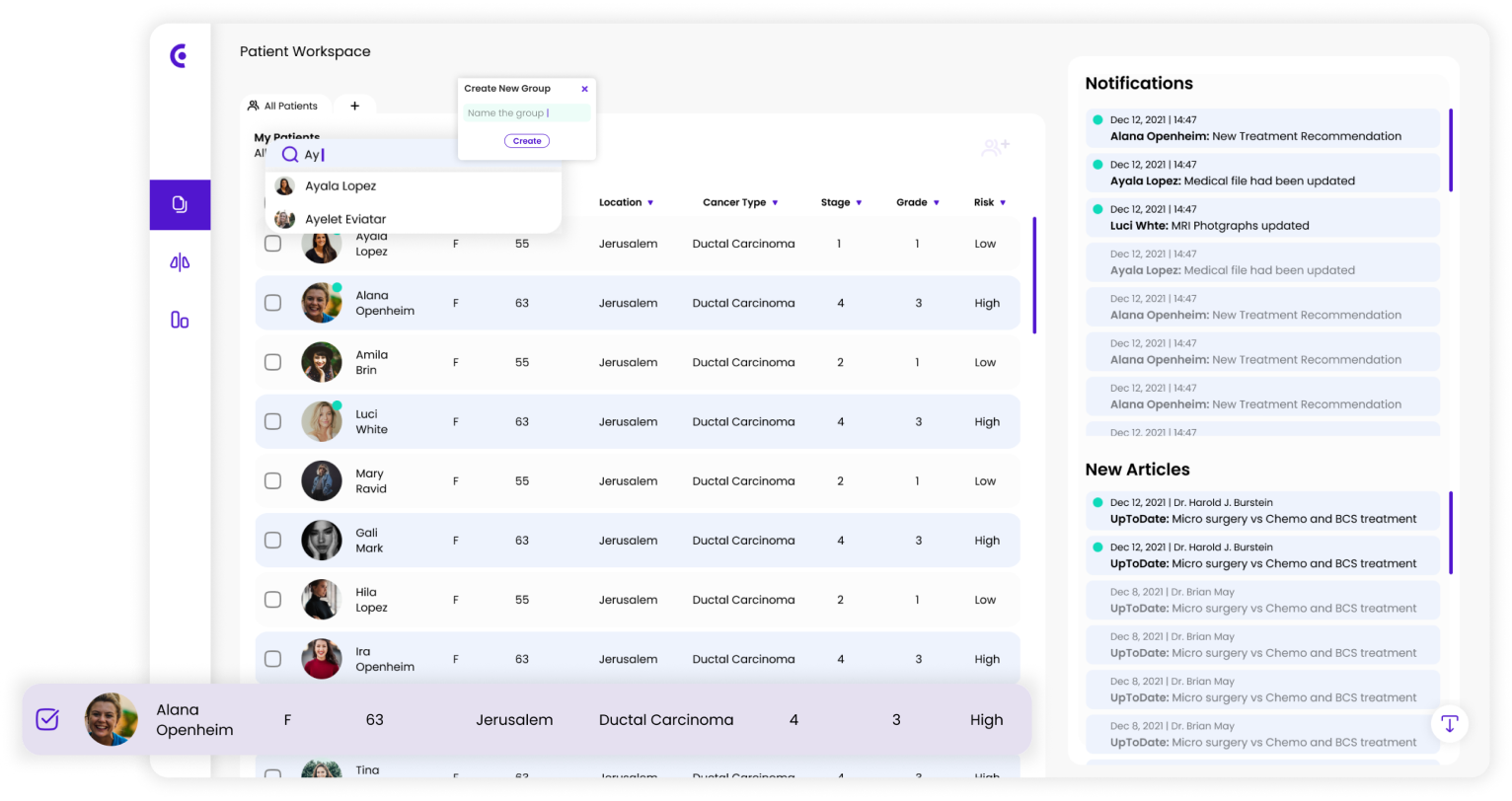
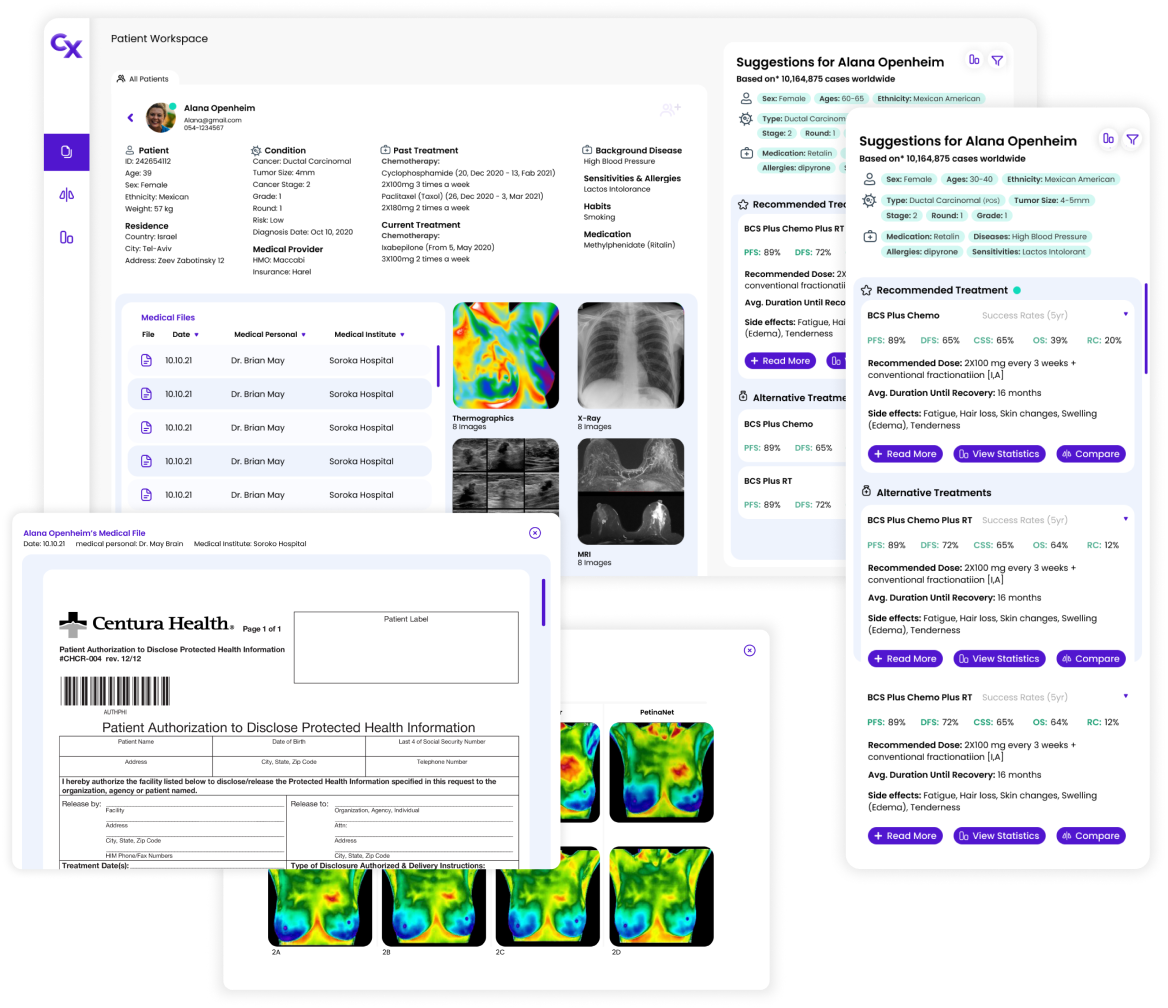
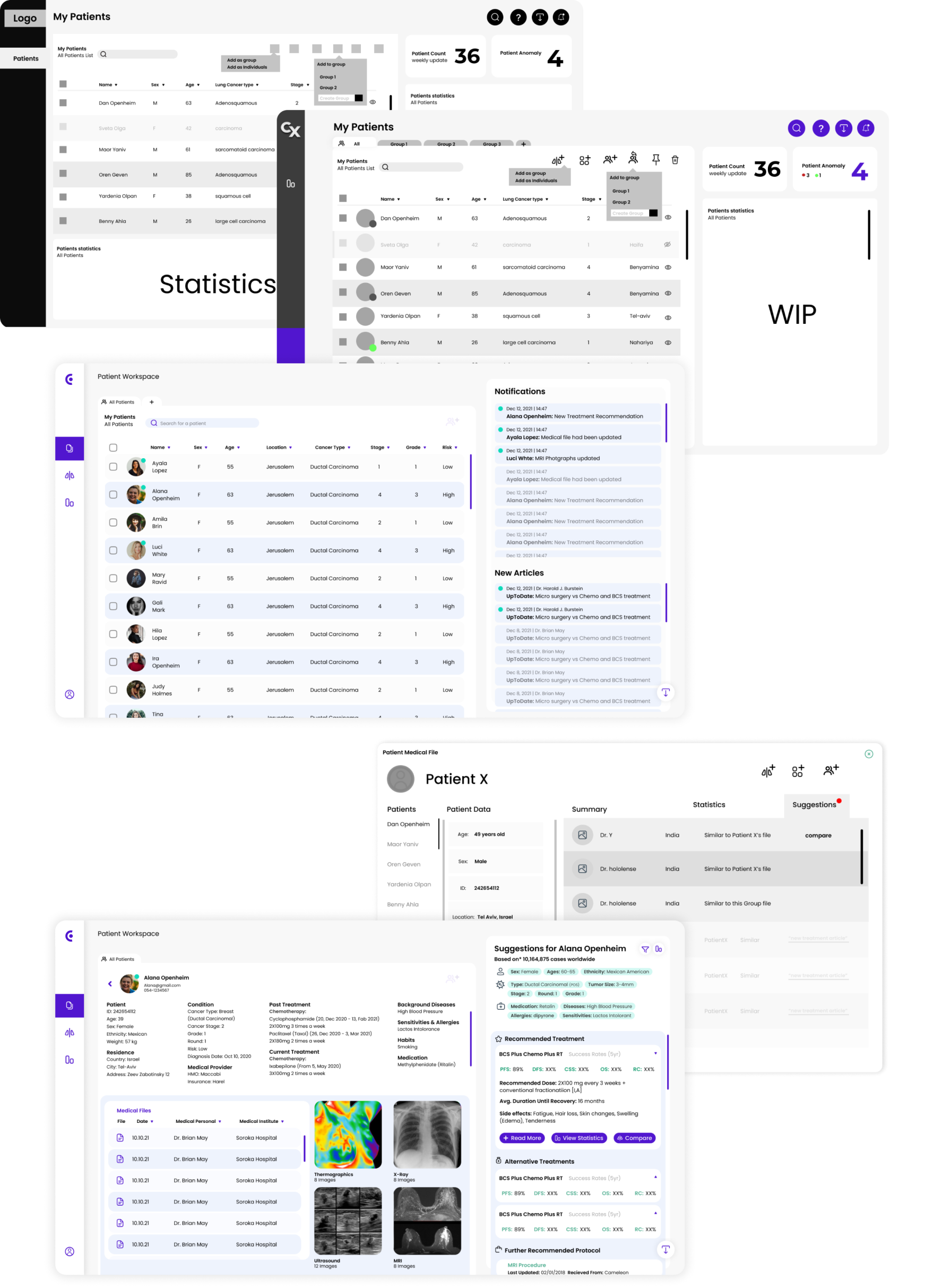
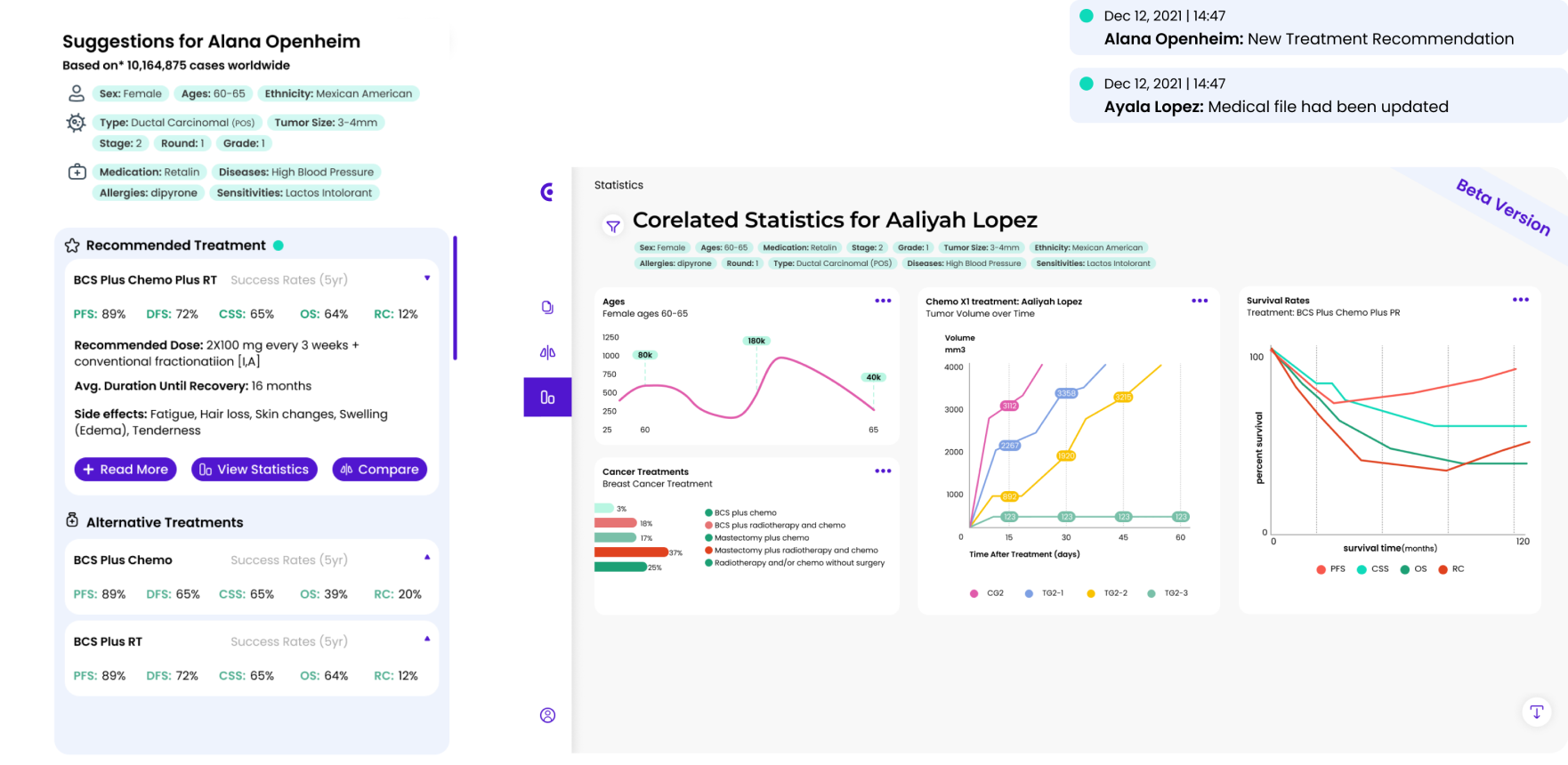
The main flow, patient workspace, allows a doctor to organize his patients as he likes, he can add them to more specific groups, recieve relevant notifications related to this patients, open each of their files, where he can see recent medical files that were updated and treatment recommendation which are based on our systems statistics of other similar cases worldwide.
Patient List:
Patient Profile and Suggestions
Compare
Low Fidelity Wireframes & High Fidelity Wireframes
Usability Test
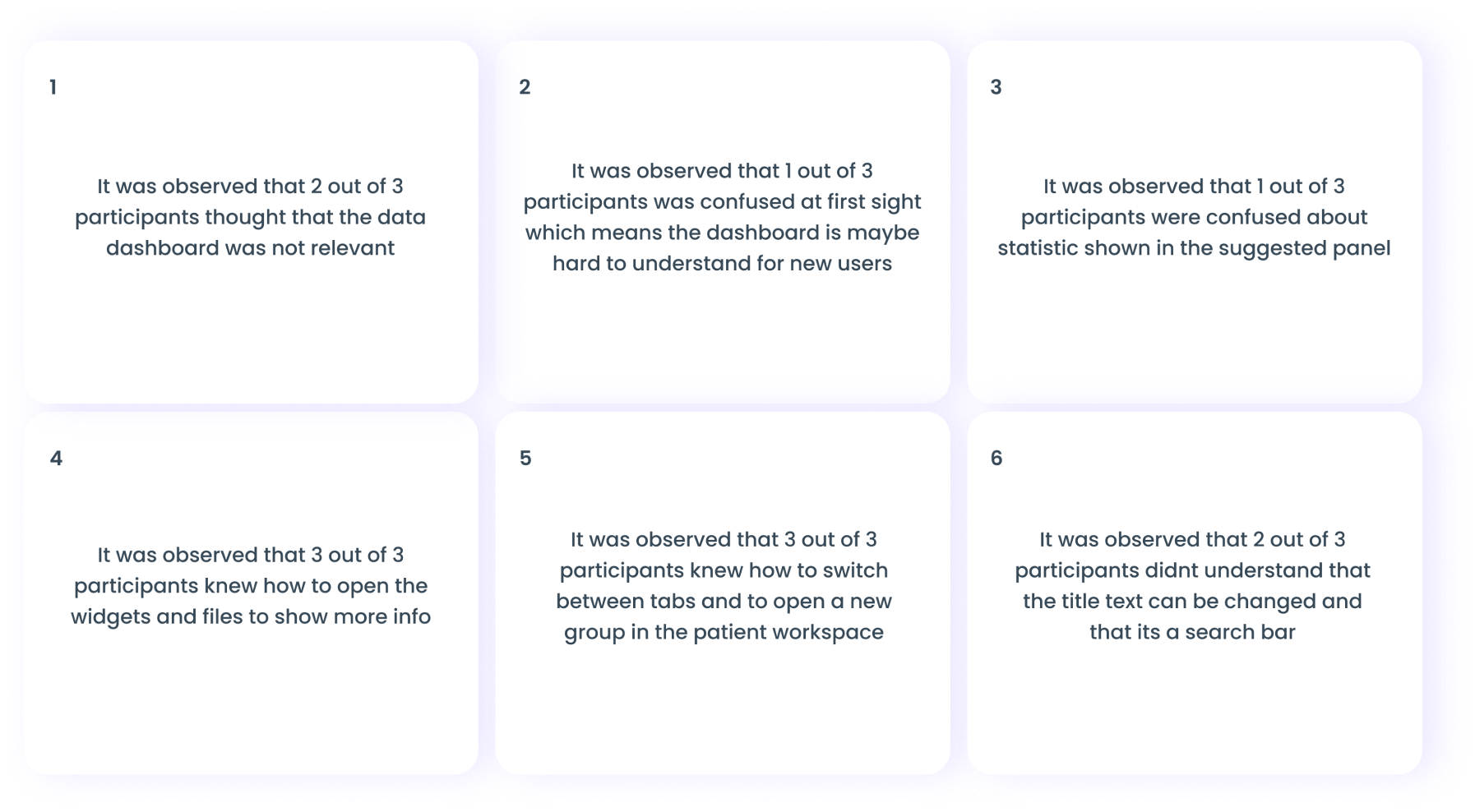
After designing a basic design now it time to test it with our users, so we conducted a usability study based on the binary success rate methadology to see if they will be able to preform tasks easily and understand the design.
Findings and Insights:
Iteration Based on Findings:
After designing a basic design now it time to test it with our users, so we conducted a usability study to see if they will be able to preform tasks easily and understand the design
Suggestion panel before iteration:
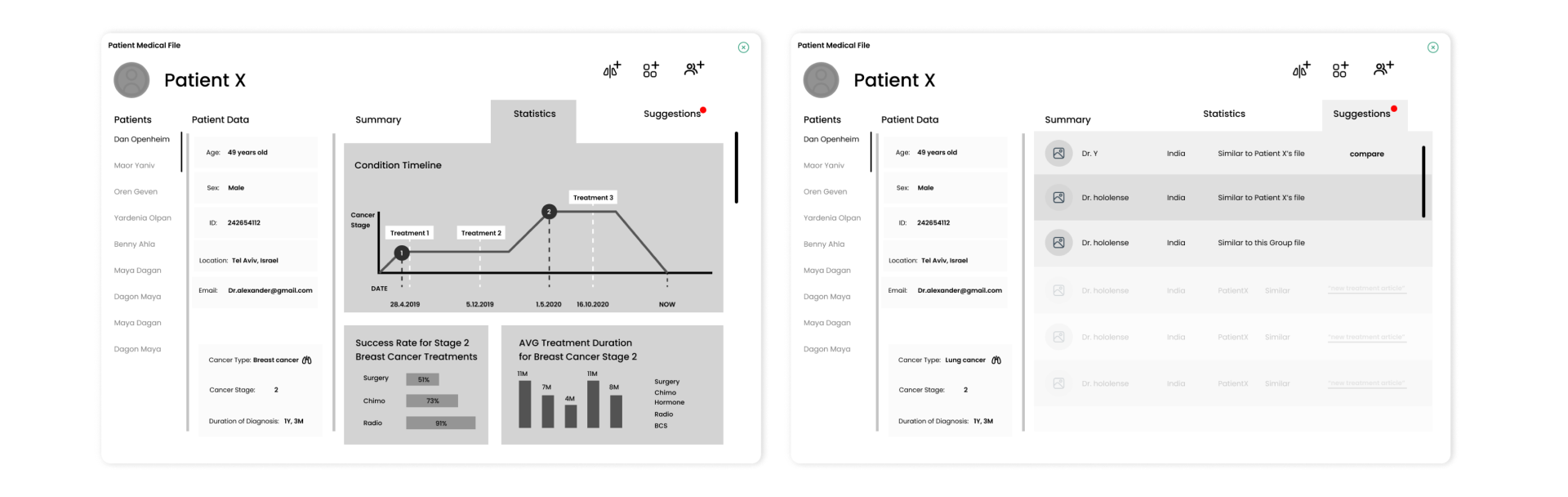
Suggestions panel after iterations
More screens
Conclusions & Overall Takeaways
This project was challenging yet rewarding, we worked as a group to solve common problems for oncologists which demanded a lot of research and understandings of medical subjects.
Eventually, we came up with creative ways to solve them. we hope that our project will someday be used by oncologists and help the world fight the battle against cancer.
What’s next?
On our next sprint, we want to countinue working on features in the software to better them while also adding new features which we have wish to add, also, we would like to conduct another qualitative usability test.
In the next sprint we will be working on:
Finishing and testing statistics feature
Re-iterate based on test
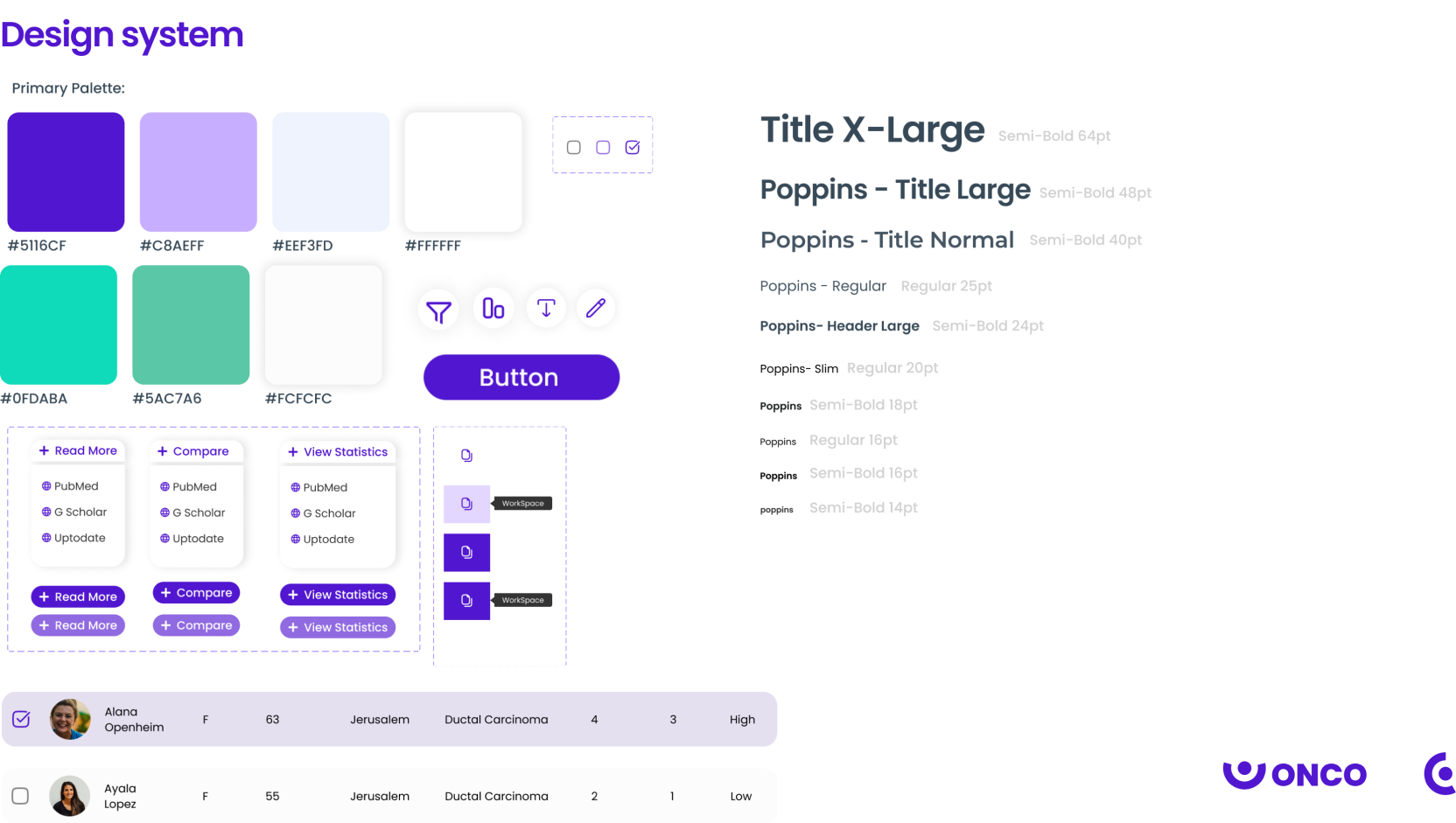
Finalize design system